
Report on the lecture by Prof Dr Gerlinde Groitl
The international order is in a phase of profound upheaval. Certainties that were long considered stable are increasingly being shaken. The self-evident nature of a liberal world order that emerged after the end of the Cold War has given way to a phase of open competition; new power constellations are emerging. In this field of tension, the rivalry between democratic and authoritarian systems is increasingly coming into focus - a competition that goes beyond traditional power politics and raises fundamental questions about values and concepts of order. The event „System rivalry - democracies and autocracies competing for values and power“ was dedicated to precisely this complex of topics.
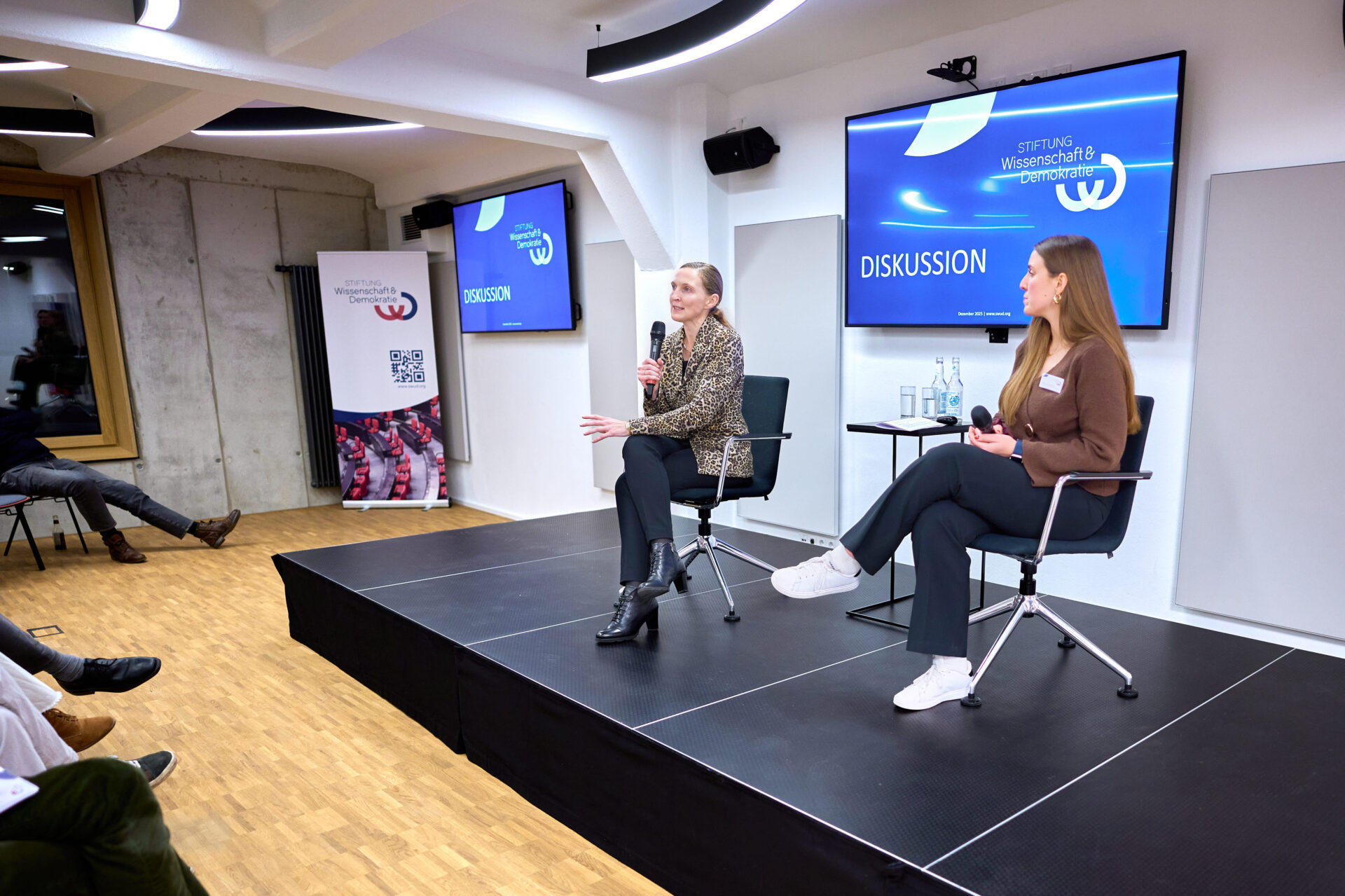
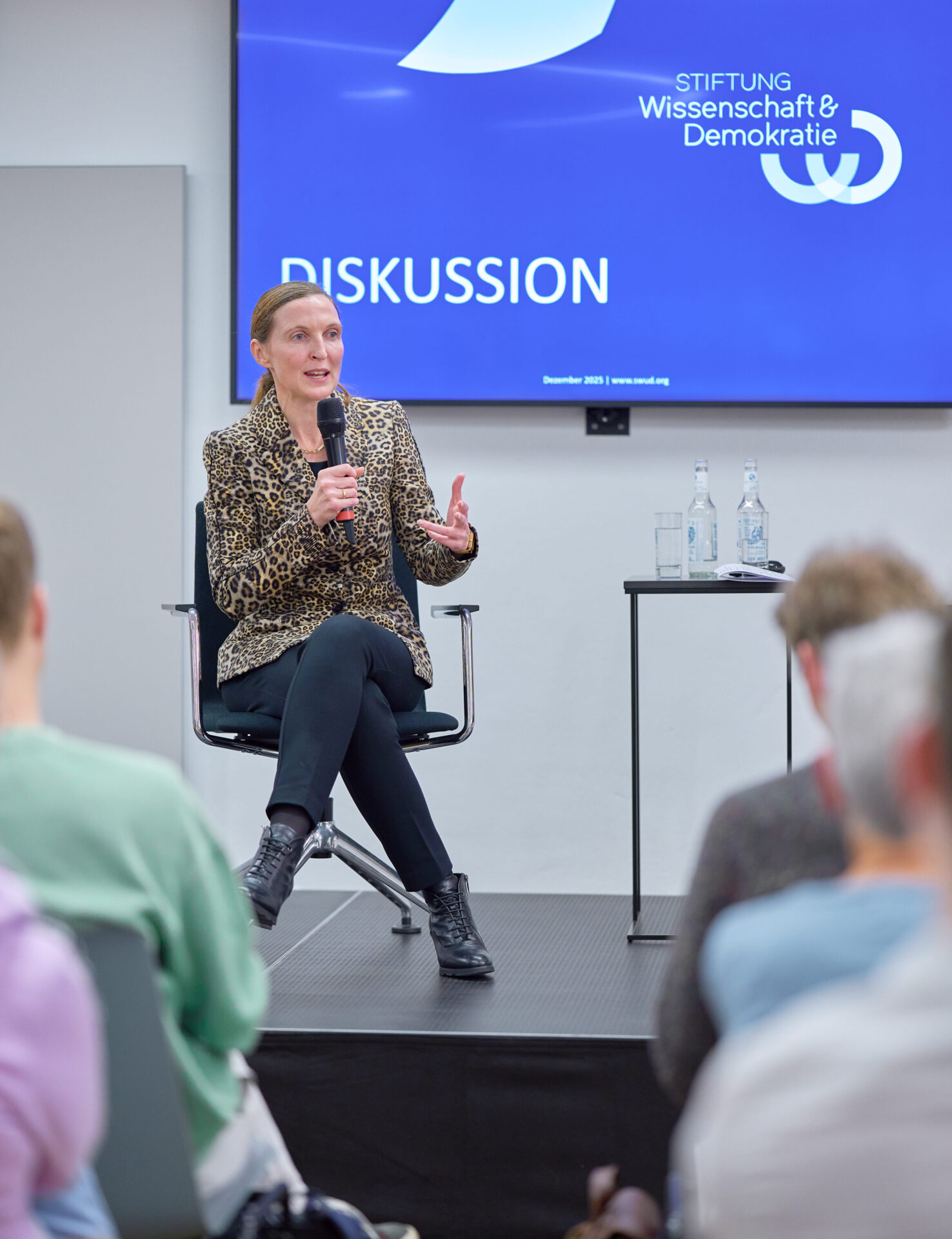
The speaker was Prof Dr Gerlinde Groitl, Director of the Institute for Security and Strategy and Professor of International Politics at the University of Regensburg. The event was moderated by Julia Werner (SW&D).
System rivalry as a defining feature of the present
In her lecture, Professor Groitl analysed the current system rivalry. She made it clear that this is not a return to old block logics, but a multi-layered competition for political, economic and normative sovereignty of interpretation. Democracies and autocracies are today engaged in a global trial of strength in which claims to power and values are inextricably interwoven. System rivalry, according to a central argument, is not a one-dimensional concept, but the result of complex interactions between claims to power, ideological convictions and the structural conditions of the international order.
It was shown particularly impressively how authoritarian systems are increasingly self-confidently propagating alternative models of order and attempting to shape international norms, institutions and discourses in their favour. This not only challenges the liberal international order, but also questions its very foundations. System rivalry is not only taking place in geopolitical arenas, but also in the struggle for narratives, legitimacy and social attractiveness.
Values under pressure, power in focus
One focus of the lecture was on the close intertwining of power politics and normative issues. Prof Dr Groitl made it clear that authoritarian states are increasingly externalising their internal political models of order and presenting them as supposedly efficient alternatives. At the same time, democratic values such as the rule of law, individual freedoms and political participation are coming under pressure - not only from external actors, but also from erosion processes within democratic societies themselves.
This dual challenge makes the current phase particularly demanding. Democracies must not only assert themselves against external attempts to exert influence, but also strengthen their own normative substance. Credibility, coherence and the ability to self-reflect are crucial resources in the competition between systems.
Scope for action and responsibility of democracies
What should democracies do now in the face of current challenges? According to Gerlinde Groitl, democracies should not defend their values defensively or purely reactively. Rather, they should demonstrate their own attractiveness through functioning institutions, social participation and a consistent commitment to international law.
At the same time, she warned against simplistic dichotomies. Authoritarian systems are not homogeneous blocs, but are also characterised by internal tensions, legitimacy deficits and social contradictions. A differentiated analysis is therefore a prerequisite for a smart and effective democratic strategy in dealing with system rivalry.
Impressions from the lecture









Photos: Eckhard Schmelter / SW&D