Report on the lecture by Prof. Dr Paula Diehl
The Basic Law is turning 77 – an occasion to take a fresh look at the resilience of our democratic system. The event „The Resilient Democracy – A History of Protection, Freedom and Responsibility“ therefore addressed the question of how democracy can be defended in the face of anti-democratic developments – not only through the protection of state institutions, but also through the active participation of society.
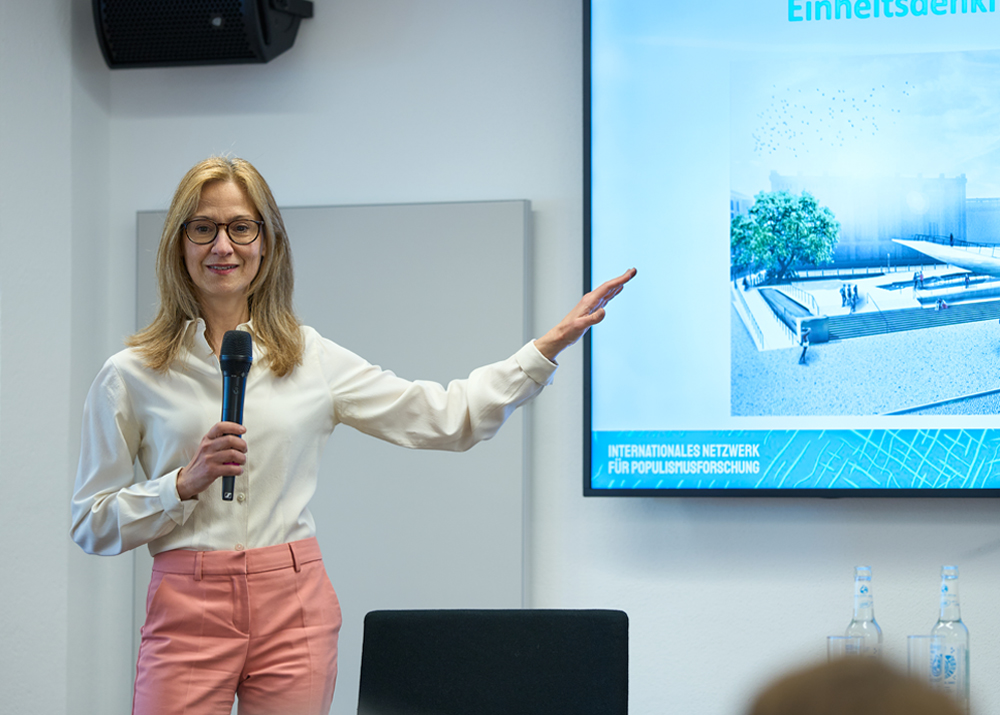
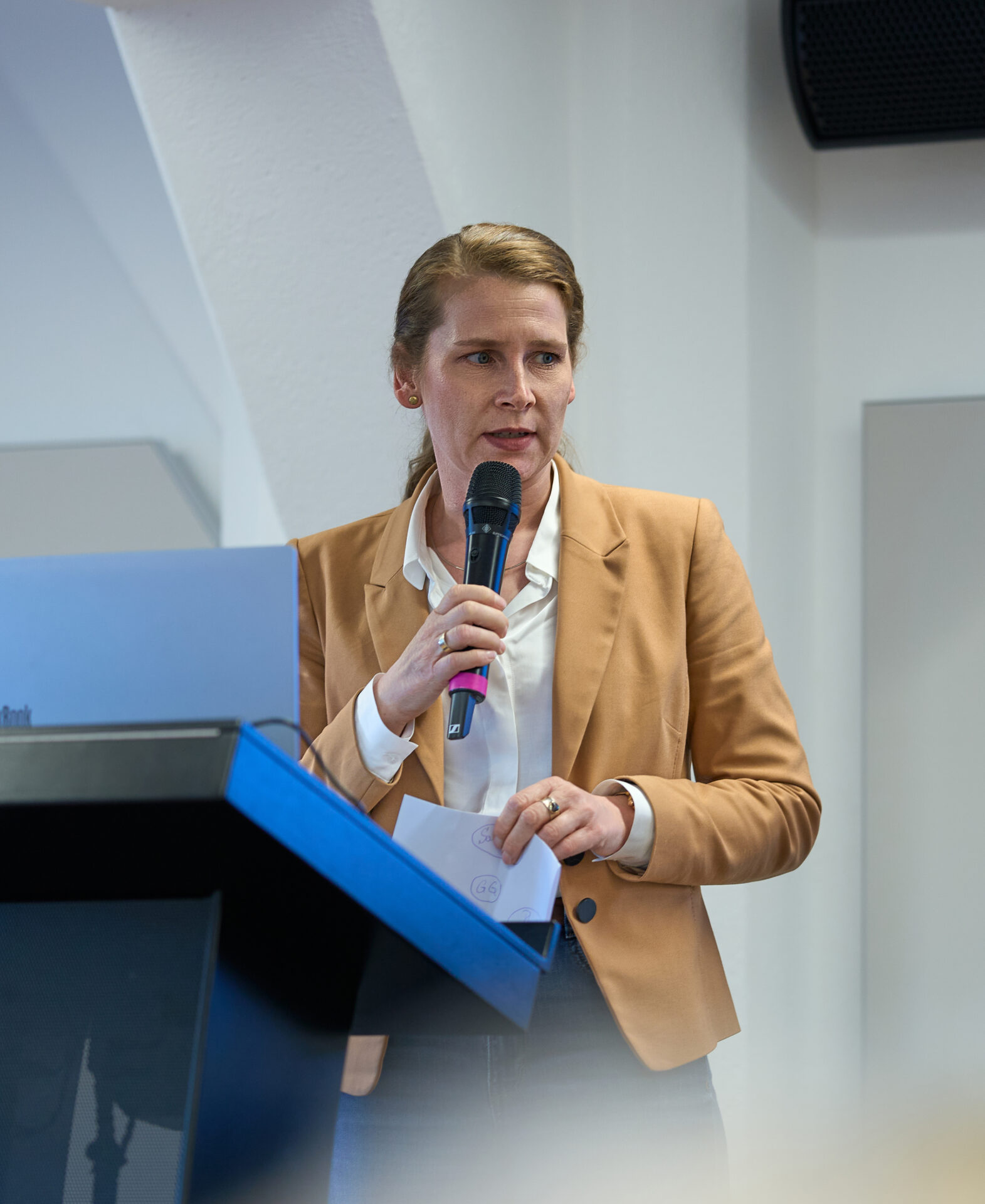
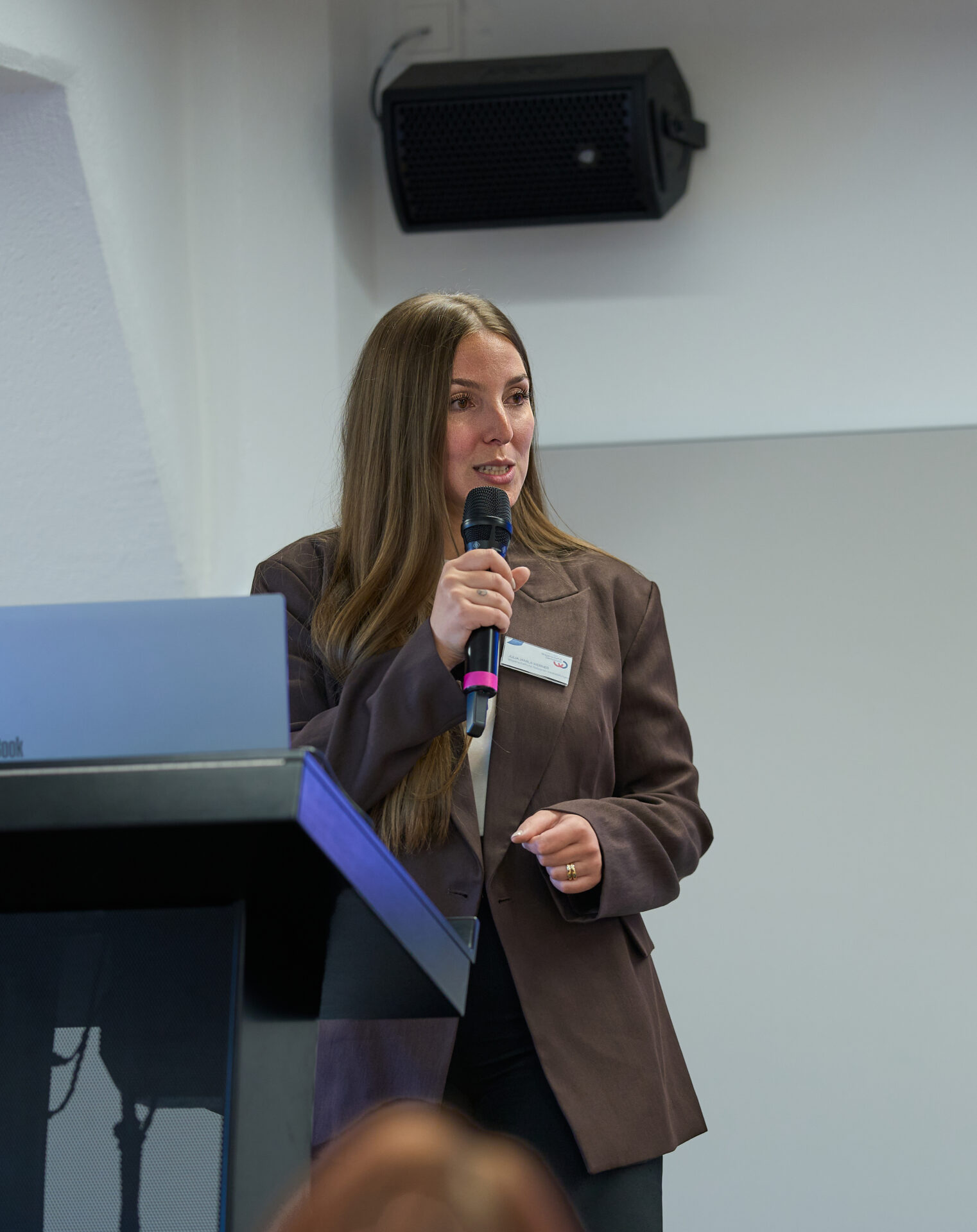
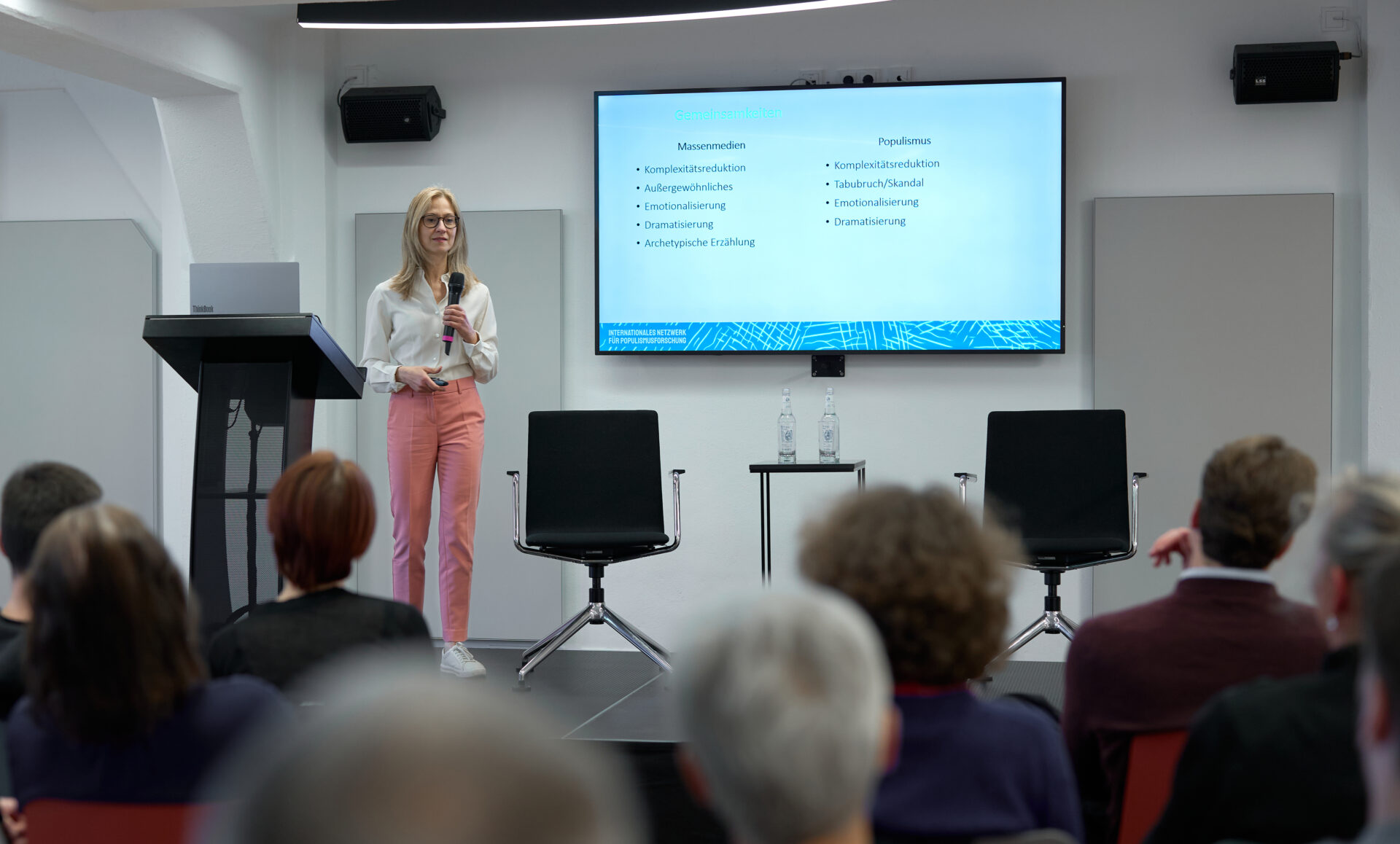
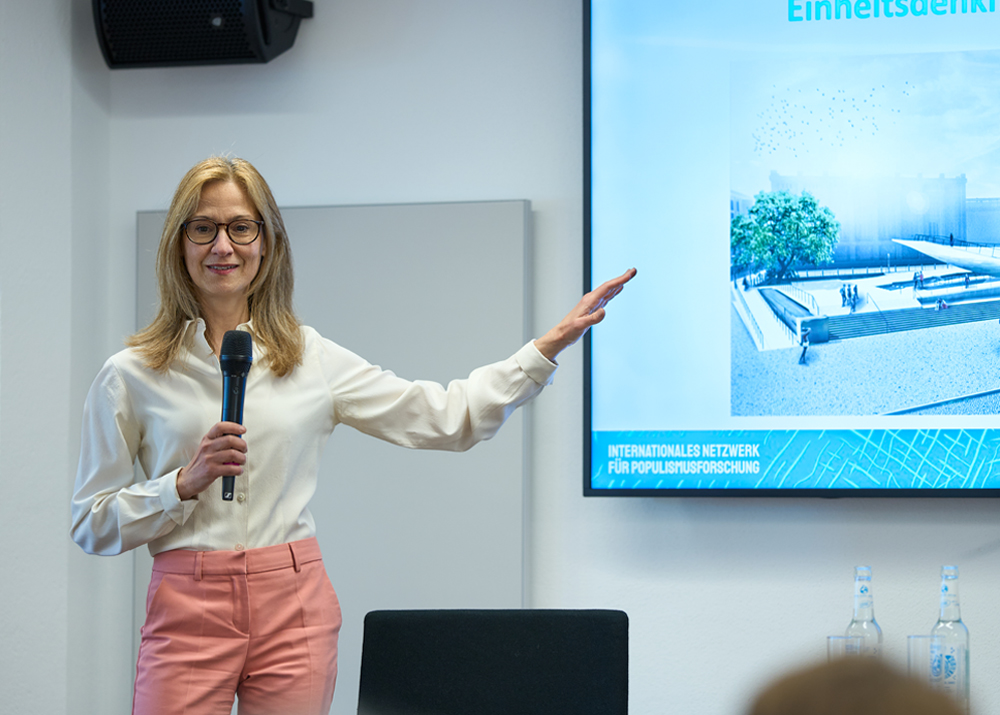
The speaker was Prof. Dr Paula Diehl, Professor of Political Theory, History of Ideas and Political Culture at the University of Kiel and Director of the International Network for Populism Research. The event was moderated by Julia Werner (SW&D).
Democracy as a collective project
At the start of the event, Paula Diehl posed the fundamental question of why democracy can only function collectively. Democracy, she argued, is more than just a political system or an institutional framework. It thrives on participation, public discourse, deliberation and the collective resolution of social conflicts. Democracy needs spaces in which different perspectives can be expressed and political participation remains possible.
It is precisely here that the particular significance of a robust democracy lies: it not only protects the formal structures of the state, but also safeguards the conditions necessary for social openness and pluralistic debate. Democracy is therefore always both resilient and vulnerable – resilient because it depends on social participation and open debate, but also vulnerable because it is precisely this openness that can be exploited by anti-democratic forces.
Populism as a challenge to a resilient democracy
The event placed particular emphasis on the topic of populism, which was examined as one aspect of the current challenges facing democratic societies. Prof. Dr Diehl explained that populist movements often work by greatly simplifying complex political issues and dividing societies into a supposedly homogeneous „people“ and an allegedly corrupt „elite“. Added to this is an anti-institutional stance that calls democratic mediation processes into question.
This becomes particularly problematic when populist strategies are combined with far-right ideologies. Right-wing populism then acts as a „gateway“ for anti-democratic ways of thinking into the democratic public sphere. Through repeated transgressions and the normalisation of extremist positions, a gradual shift in democratic norms can take place. It is precisely this development that demonstrates why the concept of a resilient democracy is of particular importance today.
The lecture made it clear that modern democracies are threatened not only by overt attacks, but also by insidious processes of desensitisation. If misanthropic statements increasingly appear to be a legitimate part of political discourse, democratic culture will change in the long term. A resilient democracy therefore also means actively defending democratic standards time and again and drawing clear boundaries against anti-democratic tendencies.
The media, emotionalisation and political polarisation
Another key focus was on the relationship between populism and the media. Diehl highlighted that populist communication relies particularly heavily on emotionalisation, dramatisation and personalisation. Complex political issues are often simplified and presented in a highly confrontational light. These mechanisms are particularly well suited to the logic of modern media.
According to Diehl, simplified messages spread rapidly, particularly on social media, and often provoked strong emotional reactions. This gives rise to a political public sphere that is becoming increasingly polarised. For a robust democracy, this presents the challenge of keeping democratic debates open without allowing anti-democratic narratives to go unchallenged.
At the same time, however, it was emphasised that democracy also thrives on conflict and controversial debate. Not every form of criticism or escalation automatically poses a threat to democracy. Rather, a distinction must be drawn between legitimate criticism of political institutions and the deliberate delegitimisation of democratic principles.
The opportunities offered by a robust democracy
In addition to the risks, the presentation also explicitly highlighted opportunities. Populist movements can sometimes draw attention to real social shortcomings and revitalise political debates. They can highlight where people feel unheard or politically excluded.
It is precisely here that an important role of a resilient democracy becomes apparent: the focus is not solely on warding off anti-democratic forces, but also on the ability of democratic systems to respond to social problems and regain trust. A strong democracy is thus characterised by its ability to take criticism on board, deal with conflicts democratically and facilitate reforms.
The discussion made it clear that democratic resilience does not arise solely through state institutions. It depends largely on whether political decision-makers, as well as Citizens are willing to take responsibility, get involved in politics and actively defend democratic values. This means that democracy is always a social practice as well.
What can strengthen a resilient democracy
The final part of the event focused on the question of how democratic societies can strengthen their resilience. Prof. Dr Diehl spoke of the need for a „democratic correction“. By this he meant actively addressing injustices, fostering social solidarity and safeguarding core democratic principles such as freedom, human rights and justice.
Particular emphasis was placed on the importance of democratic public discourse. Spaces for discussion, political education and social interaction are essential for countering polarisation and strengthening trust in democratic processes. Equally important is the ability to recognise and critically examine populist communication strategies.
The event made it clear that a resilient democracy cannot be reduced solely to bans or institutional safeguards. Rather, it thrives on an active democratic culture, on empathy, solidarity and the awareness that freedom always entails responsibility.
Democracy remains a shared responsibility
The evening highlighted just how relevant the issues of protection, freedom, responsibility and democratic resilience are, particularly in the context of the 77th anniversary of the Basic Law. The discussion on populism, social polarisation and democratic resilience made it clear that democracy is never a finished product. It must constantly be defended, shaped and developed anew.
It is precisely here that the true strength of a resilient democracy lies: not merely in its ability to defend itself, but in its openness to self-criticism, renewal and collective political action.
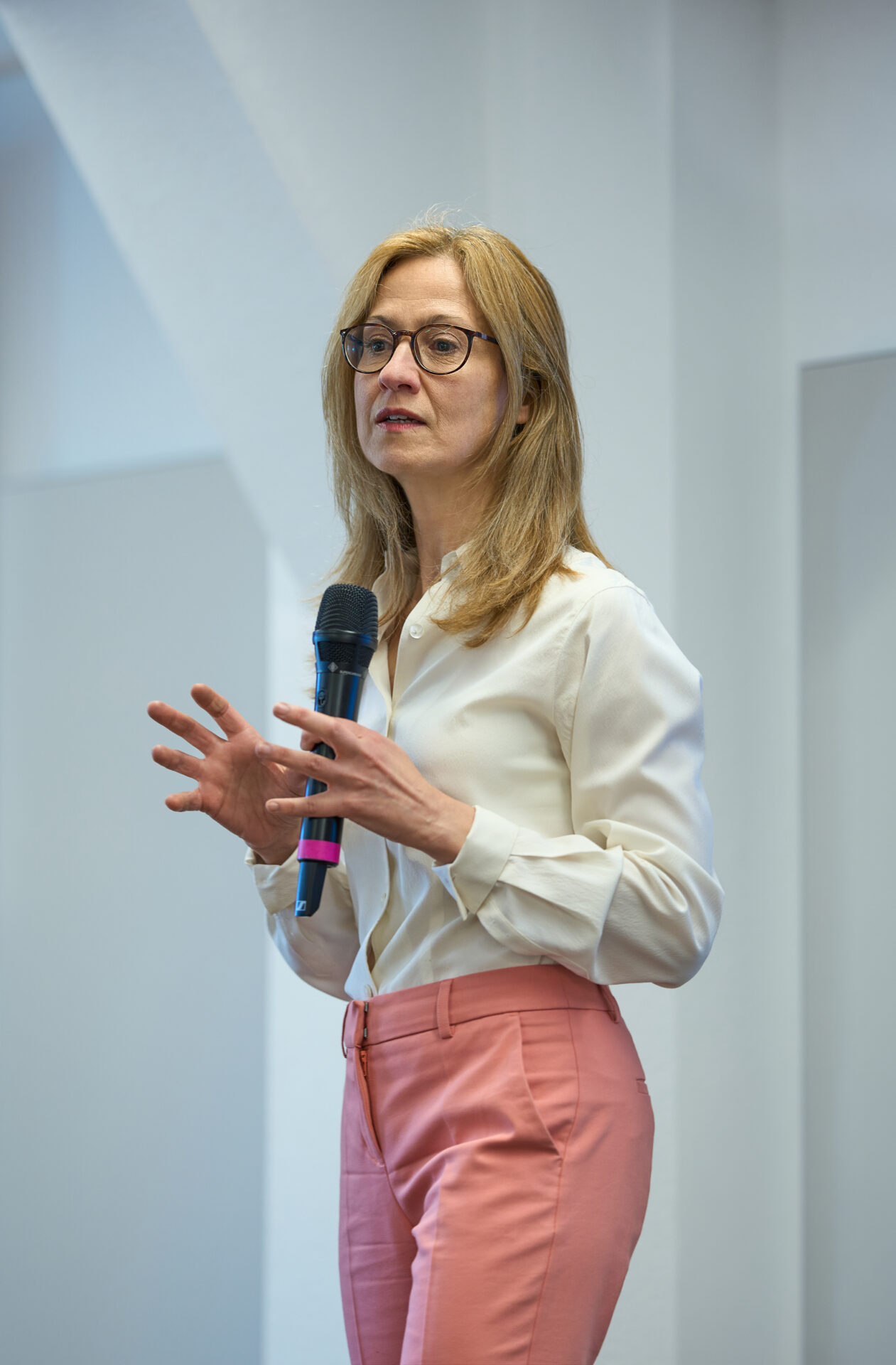
Impressions from the lecture









Photos: Eckhard Schmelter / SW&D