Report on the presentations by Oliver Kannenberg and Prof. Dr Jochen Müller
What factors determined electoral successes and defeats? How does party competition change when established parties lose support (in some cases significantly)? And what options remain when it becomes increasingly difficult to organise political majorities? The elections in Saxony-Anhalt, Mecklenburg-Western Pomerania and Berlin provide varying answers to these and other questions. Whilst in Saxony-Anhalt the focus is on the AfD’s landslide victory and the formation of a viable governing majority, Mecklenburg-Western Pomerania illustrates the role that leading figures, strategic voting behaviour and the starting position of governing parties can play. Berlin, in turn, illustrates just how significantly the balance of power can shift within a single parliamentary term.
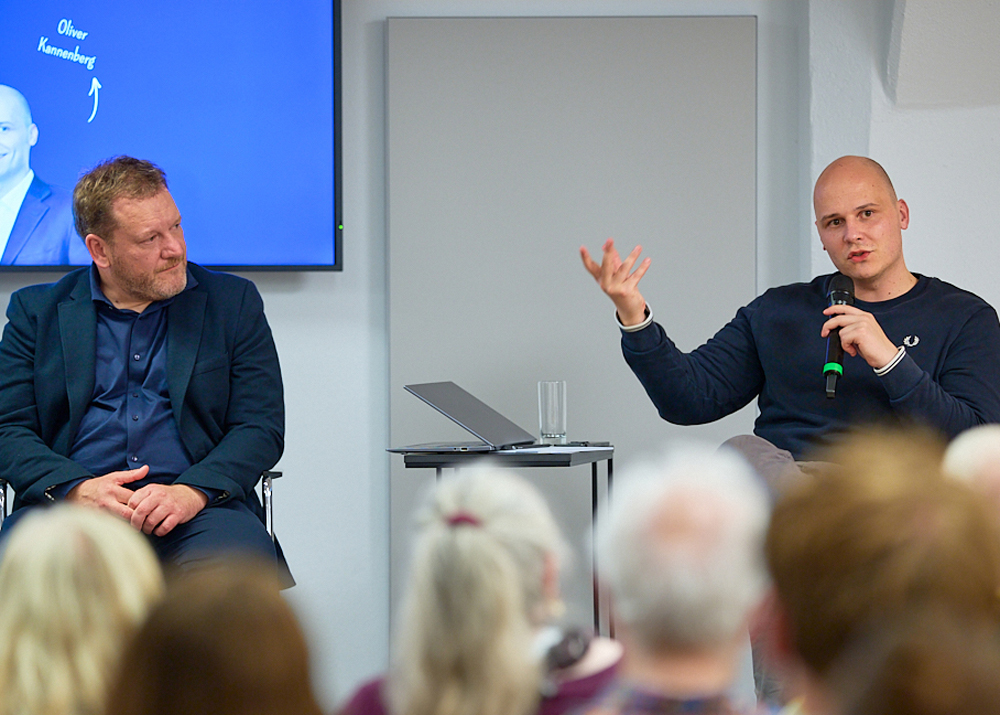
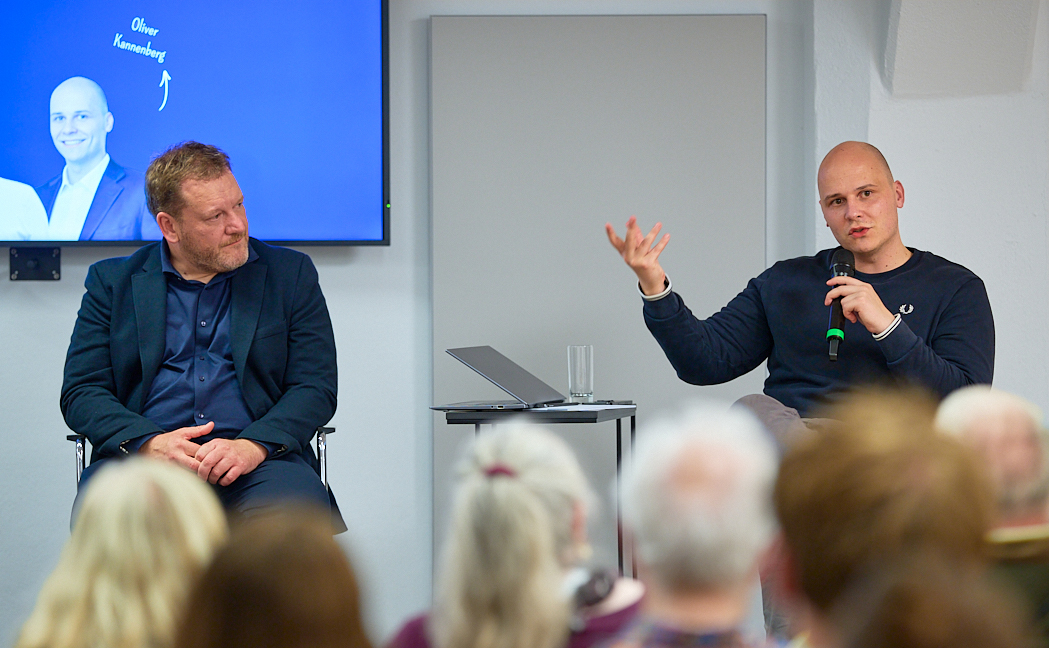
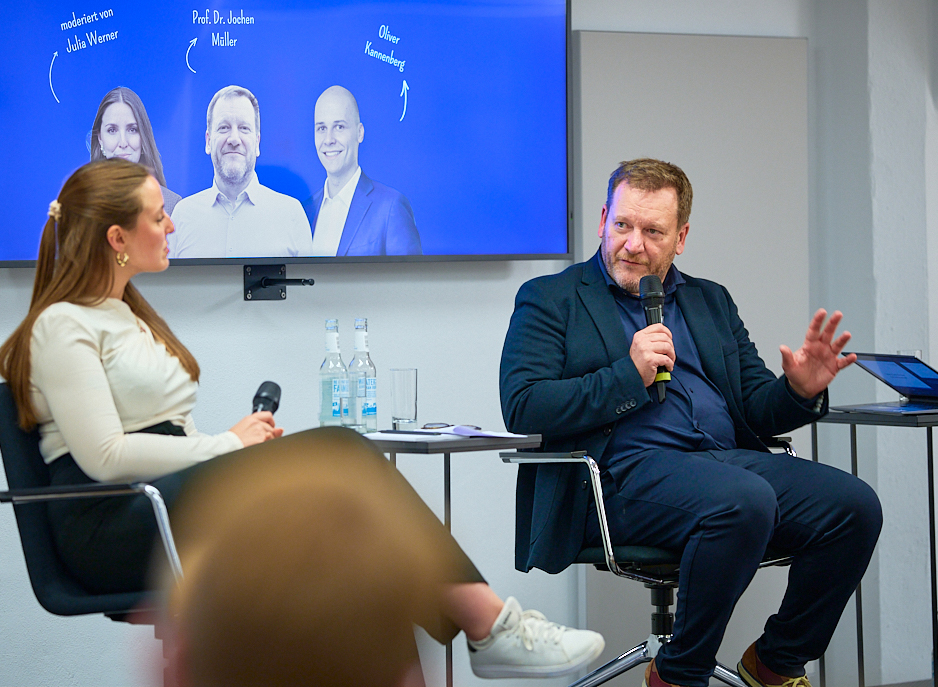
Oliver Kannenberg (IParl) and Prof. Dr Jochen Müller (University of Greifswald) analysed the election results, developments in the run-up to the elections and their political implications. The event was chaired by Julia Werner (SW&D).
Saxony-Anhalt: When election results make it difficult to form a government
The state election in Saxony-Anhalt was overshadowed by the AfD’s huge electoral success. With 43.8 per cent of the vote, it emerged as the largest party by a clear margin. The CDU secured 17.2 per cent, the SPD 9.3 per cent, Die Linke 8.6 per cent and the Greens 8.9 per cent. The BSW also secured a seat in the state parliament with 5.3 per cent. The CDU, in particular, thus suffered significant losses.
The result presents the other parties with the challenge of securing a parliamentary majority. Oliver Kannenberg (IParl) discussed various options for forming a government and the political conditions required for this. The discussion also centred on the role the BSW might play in forming a majority and how reliable such cooperation would be in light of internal party developments and possible changes in parliamentary group allegiances. Scenarios were also considered in which an election for Minister-President fails or the subsequent dissolution of the state parliament becomes a possibility.
A look at Saxony-Anhalt thus reveals a fundamental tension: an election result not only reflects political preferences, but also determines the conditions under which government can subsequently be formed. The more difficult it is to secure stable majorities, the greater the focus becomes on the ability to form coalitions, parliamentary reliability and the search for viable solutions.
Mecklenburg-Western Pomerania: Three insights into the changing landscape of party competition
The state election in Mecklenburg-Western Pomerania offers a different perspective on the changes in the party system. The AfD achieved its best result to date in the state, with 38.2 per cent, and became the largest party. The SPD, led by Minister-President Manuela Schwesig, secured 35.5 per cent. At the same time, the CDU failed to win a seat in the state parliament for the first time. The formation of a government and the future role of the opposition therefore form a key part of the current political landscape.
Prof. Dr Jochen Müller (University of Greifswald) drew three overarching conclusions from the election, which may also be significant for future state elections.
Firstly: Governing is becoming more expensive. Ruling parties should be judged not only on their political promises, but also on the results of their work and on the limits of what the state can achieve. The so-called Cost of the ruling Describe the potential disadvantage that governing parties face when competing against the opposition: they must take responsibility for decisions, resolve conflicting objectives and, at times, disappoint expectations, whilst opposition parties can voice criticism and put forward alternative proposals. In Mecklenburg-Western Pomerania, this challenge is exacerbated by the foreseeable financial constraints. According to Müller’s assessment, the state budget will have to be cut by around ten per cent from 2028 onwards. The financial leeway for political decision-making is therefore likely to narrow – with potential consequences for the work of the government and competition between the parties.
Secondly: personalisation works, but not in all circumstances. Manuela Schwesig has been Minister-President for nine years and was able to present herself as a well-known political figure during the election campaign. Alongside the substantive issues, the contest increasingly developed into a clash between the leading figures and a strategic mobilisation against the AfD. His analysis suggests that the SPD did not derive its support solely from the party’s general appeal, but also benefited from Schwesig’s high profile and her personal positioning („a woman against the right-wing“). This raises the question of under what conditions leading candidates can achieve such an effect – and how difficult it is for parties without similarly well-known figures to hold their own in the competition for attention and votes.
Thirdly: Opinion polls can influence voting behaviour. Election polls not only reflect expectations, but can also shape the perception of an election campaign. If the contest is publicly portrayed as a duel between two parties, this could focus the electorate’s attention and strategic considerations on these two forces. This makes it more difficult for smaller parties to make their mark with their own issues and proposals. Müller was thus highlighting the importance of interpretative frameworks in election campaigns: it is not only political positions and candidates that influence the contest, but also the question of which parties are perceived as having a realistic chance of success.
The analysis of Mecklenburg-Western Pomerania thus brings together three factors that go beyond the specific election: the costs of governing, the significance of political figures, and the impact of public expectations on voting decisions.
Berlin: Shifts in the party system and new questions regarding coalition-building
The election to the Berlin House of Representatives showed just how quickly the balance of power within a state can shift. The Left emerged as the largest party with 25.7 per cent, followed by the CDU with 18.8 per cent. The AfD secured 16.3 per cent, the Greens 14.3 per cent and the SPD 12.1 per cent. Whilst Die Linke made significant gains, the parties previously in government, in particular, suffered losses.
The results brought the question of possible coalitions to the fore. It was argued that consideration must be given not only to arithmetic majorities but also to political viability. This made it clear that, whilst electoral success does alter the starting point for forming a government, it does not in itself provide an answer as to how a government capable of taking effective action can be formed.
The issues raised during the election campaign also help to put the result into context. In particular, the housing market and rents – but also transport, crime and cleanliness – shaped the debate over the capital’s political priorities. The decisive factor here is not merely which issues concern voters, but also which parties they believe are capable of developing concrete solutions. The Berlin election thus highlights the importance of perceived problem-solving competence in party competition.
Compared with Saxony-Anhalt and Mecklenburg-Western Pomerania, Berlin reveals another dimension of political change: parties can gain or lose significant support within a short space of time. When it comes to forming a government, this means the task of organising new majorities and reconciling differing political expectations.
Three elections, (partly) shared challenges
The three election analyses reveal different political constellations, but point to changes that are, in some respects, similar. Across all three countries, it is clear that election results cannot be explained solely on the basis of the share of the vote. Equally important are the parties’ starting positions, the issues and figures featured in the election campaign, the electorate’s expectations and the actual possibilities for forming parliamentary majorities. A key challenge also lies in developing the capacity for political action in the face of shifting balances of power.
Impressions from the lecture
Photos: Eckhard Schmelter / SW&D