In a democracy, the people are sovereign. But what does „the people“ want? And how are hundreds of thousands or millions of citizens supposed to exercise political power? In modern mass society, democracy means representative democracy. Citizens entrust political power for a specific period to elected representatives, who make political decisions and exercise power on their behalf. Elections serve this democratic transfer of power. They are therefore the central mechanism of democratic systems.
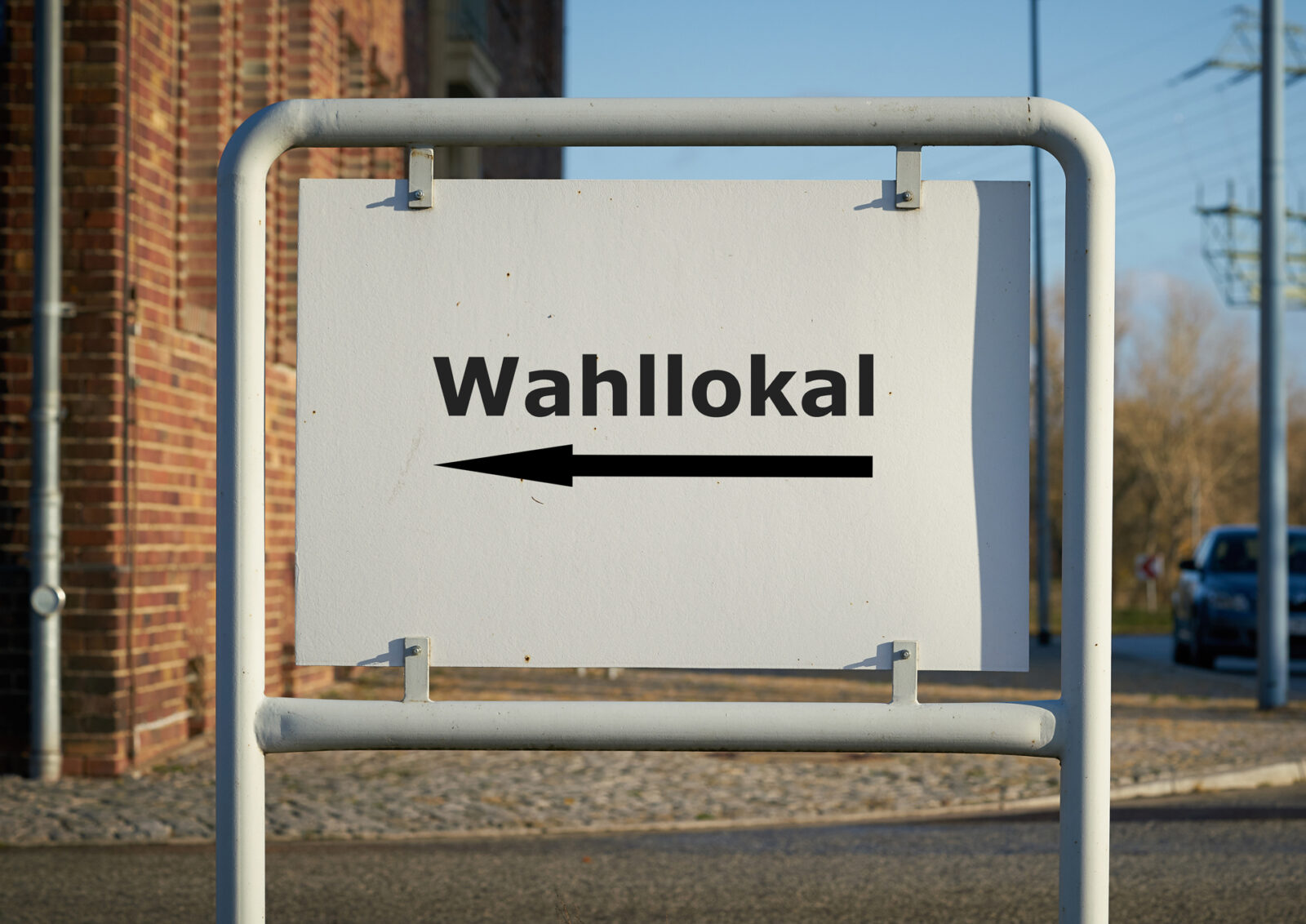
Elections are preceded by election campaigns, in which politicians and parties compete for the trust of the electorate through their manifestos, campaign advertising and election pledges. On this basis, citizens can make their voting decisions and express their interests and preferences by casting their votes. The electoral system translates voters’ votes into positions of political power and political power relations.
Elections can be regarded as democratic if the right to vote is universal, direct, free, equal and secret; if the process of forming opinions and casting votes is conducted fairly; and if citizens are able to exercise their right to vote independently. Under these conditions, elections determine the distribution of power and legitimise not only those in government and the political direction, but the political system as a whole.
This Topic page brings together articles from SW&D that examine elections both as events and as political processes. They show how political sentiments translate into votes and how political common ground leads to majorities.
An interim assessment – The US mid-term elections and their consequences
The 2026 state elections in Saxony-Anhalt, Mecklenburg-Western Pomerania and Berlin raise important questions: What do the results reveal about voting behaviour and the balance of political power? What challenges arise when forming coalitions, and what political consequences follow from this? Prof. Dr Jochen Müller and Oliver Kannenberg discussed these issues, with Julia Werner acting as moderator. The discussion looked beyond state politics: what significance do the election results have beyond state borders? And what do they reveal about political developments in Germany?
The French presidential election: an analysis of the race to succeed Macron
The 2026 state elections in Saxony-Anhalt, Mecklenburg-Western Pomerania and Berlin raise important questions: What do the results reveal about voting behaviour and the balance of political power? What challenges arise when forming coalitions, and what political consequences follow from this? Prof. Dr Jochen Müller and Oliver Kannenberg discussed these issues, with Julia Werner acting as moderator. The discussion looked beyond state politics: what significance do the election results have beyond state borders? And what do they reveal about political developments in Germany?
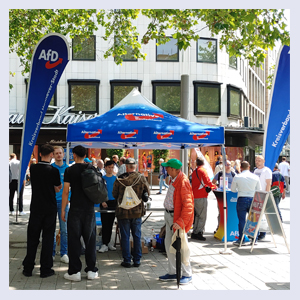
Not voting is a thing of the past: How the AfD is mobilising former non-voters
In the past, people were encouraged to vote in large numbers in order to weaken far-right parties. In the 2026 state elections, however, former non-voters helped fuel the rise of the AfD. In her analysis, Julia Rakers explains the classic reasons for not voting – and how the AfD skilfully addressed these in its election campaign.

Lula and his epic victory in his fourth term in office
Brazil has voted: the outgoing president is also the new one. In the first round of voting, however, he had only come second. Silvana Krause and Carlos Emilio Bellini Borenstein analyse how Lula managed to stage a comeback and how his victory should be interpreted.

Halfway to the 2028 US presidential election – or towards a full-blown dictatorship? The 2026 US mid-term elections
Four more weeks – then the US congressional elections will take place. The forecasts look good for the Democrats – but does that also bode well for US democracy, which has been shaken by Trump? This was the topic of discussion among political scientists Christian Lammert, Julia Simon and Frank A. Stengel at an event organised by the German Political Science Association (DVPW).

Second attempt at the mayoral election in Strausberg
The second round of the mayoral election took place in Strausberg on 20 September. This had been preceded by irregularities in the postal vote. The district administrator initially prohibited the run-off elections. The Administrative Court nevertheless ordered that the run-off take place. However, following the run-off, the town councillors declared the entire mayoral election invalid. Daniel Hellmann from the Institute for Parliamentary Research puts these events into context in a report by rbb.
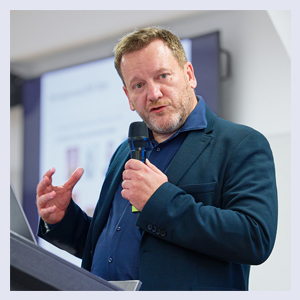
Three elections, many questions: an analysis of the state elections in Saxony-Anhalt, Mecklenburg-Western Pomerania and Berlin
The 2026 state elections in Saxony-Anhalt, Mecklenburg-Western Pomerania and Berlin raise important questions: What do the results reveal about voting behaviour and the balance of political power? What challenges arise when forming coalitions, and what political consequences follow from this? Prof. Dr Jochen Müller and Oliver Kannenberg discussed these issues, with Julia Werner acting as moderator. The discussion looked beyond state politics: what significance do the election results have beyond state borders? And what do they reveal about political developments in Germany?
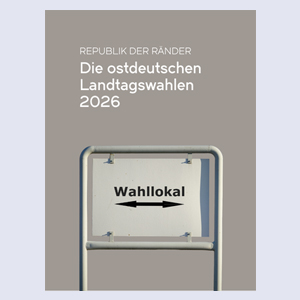
„The Greens really gave the SPD a hard time during the last parliamentary term“: political scientist Jan Müller on the election result and the coalition talks in Mecklenburg-Western Pomerania
In the state election in Mecklenburg-Western Pomerania, „the woman against the Blues“ may have been defeated; nevertheless, Manuela Schwesig is likely to remain Minister-President. Jan Müller, who heads the „Politics and Elections in Mecklenburg-Western Pomerania“ research group at the University of Rostock, discusses the election campaign, the result, the negotiations on a red-red-green coalition and the future role of the AfD and the CDU in this interview.
„A left-wing coalition is the most likely outcome, but by no means a foregone conclusion“: What lies ahead for Berlin?
Following the Left Party’s election victory in Berlin, the debate over a red-green-red coalition is in full swing. The SPD and the Greens are setting out their conditions, but there is also support for an alliance with Die Linke. Oliver Kannenberg, a researcher at the Institute for Parliamentary Studies specialising in coalitions, explains in an interview how the talks will unfold over the coming weeks and what could cause them to fail.
It all comes down to the incumbent! The leading candidates as the decisive factor in the state elections in September 2026
‚State leaders‘ generally enjoy a high standing in their respective federal states and often serve as a key selling point for their parties during election campaigns. Hendrik Träger, a political scientist from Leipzig, analyses the significance of the incumbent leaders in the recent state elections in Mecklenburg-Western Pomerania and Saxony-Anhalt – and what role the leading candidates played in the election of members of the Berlin Parliament, where the Governing Mayor did not stand for re-election.

The significance of state elections at the federal level
What significance do the state elections in September 2026 hold for Chancellor Merz and the CDU? Dann Schindler from the Institute for Parliamentary Research discussed the situation within the party with the Spanish newspaper *La Voz de Galicia*.
A capital city going its own way? Berlin ahead of the House of Representatives election
Following the 2023 by-election, the next regular election for the Berlin House of Representatives is now due to take place. Polls predict very similar results for the CDU, Die Linke, the AfD and the Greens. An event organised by the DVPW examined party positions, key campaign issues, leading candidates, the electoral landscape, coalition options and – in light of recent events – questions regarding the organisation of the election.

How new elections could be held in Saxony-Anhalt
Following the election in Saxony-Anhalt, the balance of power in the state parliament is complicated. As a result, there is already speculation about a snap election. Daniel Hellmann from the Institute for Parliamentary Research explains to MDR AKTUELL how a snap election might actually be brought about.
Poster Populists: Marcel Lewandowsky on the AfD’s election campaign
The AfD is putting forward ‘son-in-law’ types in Saxony-Anhalt and Mecklenburg-Western Pomerania. Political scientist Marcel Lewandowsky, Professor of Government and Policy Research at Martin Luther University Halle-Wittenberg and a specialist in populism, explains in an interview what lies behind these friendly facades.
Between rhetoric about the East and nationwide strength: the AfD’s territorial identity ahead of the state elections in the East
What role does „the East“ play for the AfD? And what internal party tensions might a victory for the party – of all things – in the state elections in Saxony-Anhalt and Mecklenburg-Western Pomerania trigger? Giovanni de Ghantuz Cubbe analyses the AfD’s territorial self-image, caught between an ‘Eastern’ identity and the aim of becoming a pan-German people’s party.
Something completely new in the East: scenarios for forming a government following the September elections
Following the state elections in Saxony-Anhalt, Mecklenburg-Western Pomerania and Berlin, forming a government could prove extremely difficult. From an AfD-led single-party government to minority governments and even a „rotating governing mayor“, novel governing constellations are possible in all three states. Our pw-portal editor, Volker Best, has set out all the possible scenarios.

The choice of candidate in Berlin-Mitte: Who is it for, and why?
Many citizens are not allowed to vote in the election for the Berlin House of Representatives because they do not hold German citizenship. They can now cast a symbolic vote in the so-called „symbolic election“. Daniel Hellmann from the Institute for Parliamentary Research gives his views on the prospects for electoral reform on rbb Inforadio.
The underdogs in the race to clear the five per cent hurdle
In the state election in Saxony-Anhalt, whether the AfD secures a majority of seats is likely to hinge on whether – and how many – of the smaller parties make it into the state parliament. So what are their chances? How can they manage to attract voters’ attention in an election campaign that is heavily focused on the AfD and the CDU? What role do the organisational structures, policy demands and leading candidates of the SPD, the Greens, the FDP and the BSW play in this regard? Political scientist Roger Stöcker from the University of Magdeburg, who wrote his doctoral thesis on the party system in Saxony-Anhalt, offers his assessment in this interview.

Is postal voting a gateway to fraud?
Ahead of the upcoming state elections in Saxony-Anhalt, postal voting is once again the subject of false claims and uncertainty. The postal system and the security of received ballot papers, for example, are cited as potential vulnerabilities for electoral manipulation. Some are also concerned about the secrecy of the vote. Daniel Hellmann from the Institute for Parliamentary Research, amongst others, provides some context.

What next for the firewall? A debate between Christian Stecker, Julia Reuschenbach and Frank Decker
In his article for the pw-portal, Christian Stecker argued that the ‘firewall’ had failed and was ultimately benefiting the AfD. He therefore called for a shift in thinking towards flexible majorities. Julia Reuschenbach and Frank Decker disagree. The pw-portal has therefore invited Christian Stecker to defend his position in a debate with his two colleagues.
Why a hermetic fire wall does more harm than good
According to the polls, the AfD is set to become the largest party in the state elections in Saxony-Anhalt and Mecklenburg-Western Pomerania. Political scientist Christian Stecker therefore considers the ‘firewall’ to have failed. He argues that it actually strengthens the AfD and denies its voters a fair consideration of their interests. Instead, Stecker calls for a shift in thinking towards flexible majorities. This is the opening salvo in a debate that is being continued on the Portal for Political Science in the form of a discussion between Stecker and his colleagues Julia Reuschenbach and Frank Decker.
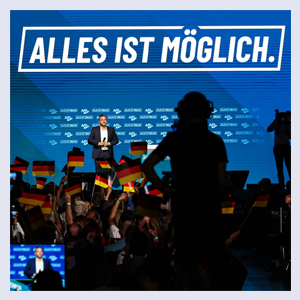
What might an AfD-led single-party government in Saxony-Anhalt achieve? An assessment from a (constitutional) legal and political perspective
What if an AfD government in Saxony-Anhalt were able to do as it pleased – with its own majority, but within the existing legal and financial framework? Political scientist Sven Leunig has analysed in detail which of the demands set out in the AfD’s „government programme“ could actually be implemented. His conclusion: only around a third are financially and legally feasible.
Do opinion polls harm democracy?
The media is full of election polls and popularity rankings of politicians. But is the ubiquity of political opinion polling good for democracy? Michel Dormal has studied the relationship between opinion polling and democracy in depth. In this interview, he discusses the promises of opinion polling, the criticism levelled at it, and explains which types of polls are best avoided.
An interview with Torsten Oppelland: „Attention in state politics is very much focused on the Minister-President“
Be honest, how many ministers in your federal state can you name? Not many? But the name of the Minister-President probably springs straight to mind. What role do this person and the popularity they have gained whilst in office generally play in state elections – and what role will this „incumbent’s advantage“ play in the upcoming elections in Saxony-Anhalt, Mecklenburg-Western Pomerania and Berlin? These are the questions addressed in an interview with Torsten Oppelland, until recently an adjunct professor of comparative government at the University of Jena.

Is it all just a hoax? Five myths about electoral fraud
Rumours of alleged electoral fraud keep circulating on social media. Such claims can undermine confidence in democracy. In this article, Daniel Hellmann from the Institute for Parliamentary Research debunks the most common myths about electoral fraud and explains how elections are protected against manipulation.
Too close to call: Divided East-West states head to the polls
The state elections in Saxony-Anhalt and Mecklenburg-Western Pomerania could mark a real turning point. In both states, the AfD is leading the polls; in Saxony-Anhalt, even an absolute majority of seats for the AfD cannot be ruled out. A panel of experts discussed the possible scenarios, how the formation of a government might unfold, and what else one needs to know about the elections at an event organised by the DVPW.

Should election dates be consolidated?
Should the dates for local, state and federal elections be brought together? Danny Schindler from the Institute for Parliamentary Research spoke to BR24 about the pros and cons of combining election dates.
Sign up to receive updates, promotions, and sneak peaks of upcoming products. Plus 20% off your next order.